Why Older Homes in Germantown Need a Closer Look Below Grade
If you own a home in Germantown that was built decades ago, you already know charm comes with quirks. But some quirks are more than cosmetic, especially when they show up in the basement or along the foundation. Older homes in Montgomery County were often built with materials and methods that simply were not designed to handle today's shifting soils and heavier rainfall. That means the signs of foundation trouble can be subtle at first and easy to dismiss as normal settling.
The key is knowing what to check below grade before small issues turn into expensive repairs. Foundation problems signs often start in the basement, crawlspace, or along the exterior foundation wall where you rarely look. By the time you notice a sticking door or a crack in the drywall upstairs, the underlying issue may have been developing for years. This guide walks you through the most important warning signs so you can act early and protect your investment.
Basement Wall Cracks: What They Look Like and What They Mean
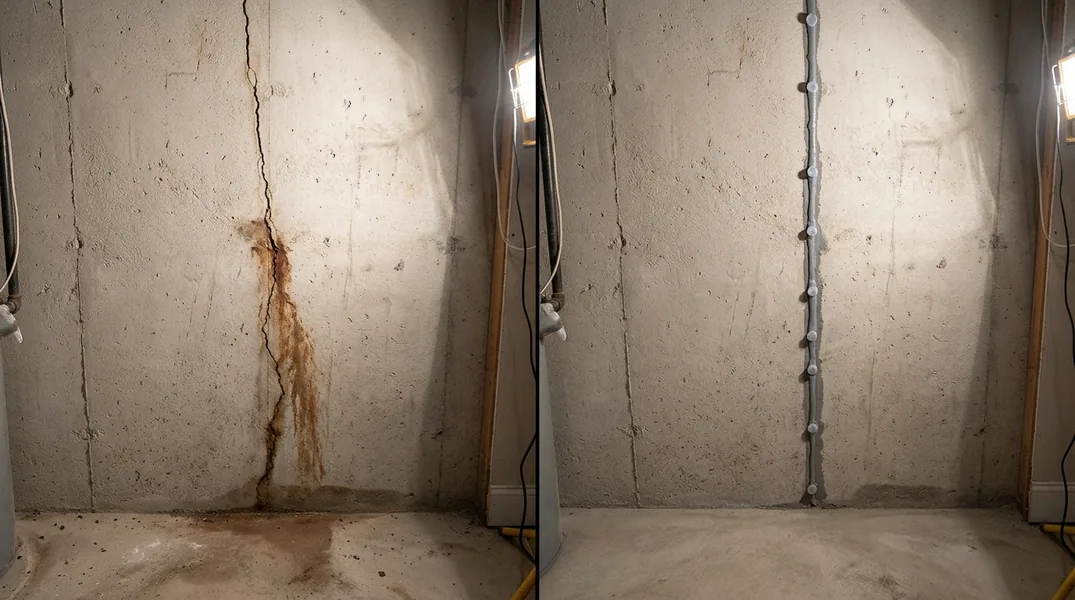
Not every crack is a crisis, but some are. Hairline cracks in poured concrete walls are common and often caused by shrinkage as the concrete cured. However, cracks that are wider than a quarter inch, that run diagonally, or that appear to be growing should get your attention. Stair-step cracks in block walls are especially concerning because they often point to soil movement or settling beneath the foundation. If you see horizontal cracks, that is a red flag for lateral pressure from soil and water pushing against the wall.
Take a few minutes to inspect your basement walls with a flashlight. Look for white powdery deposits (efflorescence), which indicate water is moving through the concrete. Check for cracks that let in daylight or moisture, and note any areas where the wall feels soft or crumbly. These basement wall cracks are often the first visible sign that your home needs professional Foundation Waterproofing. Catching them early can mean the difference between a minor repair and a major structural fix.
Bowing Basement Walls and Other Structural Warning Signs
A bowing basement wall is one of the most serious foundation problems signs a homeowner can find. It usually happens when hydrostatic pressure from saturated soil pushes inward against the wall. You might notice the wall leaning, curving, or bulging toward the inside of the basement. In some cases, the top or bottom of the wall may pull away from the floor joists or the sill plate. If you can fit a coin into a gap at the top of the wall, that is a sign the wall is moving.
Other structural clues include doors and windows that suddenly stick, floors that feel uneven or bouncy, and cracks in interior drywall near corners. Chimneys can also lean away from the house. These symptoms often point to a foundation that is settling or a wall that is under stress. A bowing basement wall should never be ignored, because it can worsen quickly once water is involved. If you spot any of these issues, it is worth getting a professional assessment before the next heavy rain season.
Historic Home Waterproofing: Special Care for Older Foundations
Older and historic homes require a thoughtful approach to waterproofing. Many were built with stone or brick foundations that were never designed to be perfectly watertight. Modern waterproofing methods need to respect the original materials while still keeping water out. For example, applying a heavy sealant to a historic stone foundation can trap moisture and cause spalling, so the right solution often involves managing drainage rather than just coating the walls. That is why historic home waterproofing should be handled by someone who understands older construction.
In many cases, the best approach combines exterior drainage improvements with an Interior Drain Tile System to relieve pressure and redirect water away from the foundation. Sometimes Exterior Basement Waterproofing is needed to address the source of the moisture from the outside. A professional evaluation will help you choose the least invasive option that protects both your home's structure and its character. If your older home is showing signs of water intrusion, a free estimate is a smart first step.
Foundation Problems Signs Near Me: When to Call a Germantown Professional
If you live in Montgomery Village or Gaithersburg, you may be wondering how to tell whether your foundation issue is serious. A good rule of thumb is to call a professional when you see any of the following: a bowing basement wall, cracks that are widening, water staining or efflorescence on the walls, or doors and windows that no longer close properly. These are not problems that typically resolve on their own, and delaying can lead to more costly repairs.
At Germantown Waterproofing, we specialize in helping homeowners in Clarksburg and the surrounding area understand what is happening below grade. We can inspect your basement, identify the signs of foundation trouble, and recommend a solution that fits your home and budget. Whether you need Basement Waterproofing or a more targeted repair, we are here to help. Call us at (240) 261-0659 to schedule a free estimate and get peace of mind before the next storm.
Looking for a professional basement waterproofing contractor in Germantown? Germantown Waterproofing responds fast for all your basement waterproofing needs.
Get a Free QuoteOur services: Basement Waterproofing · Interior Drain Tile System · Exterior Basement Waterproofing