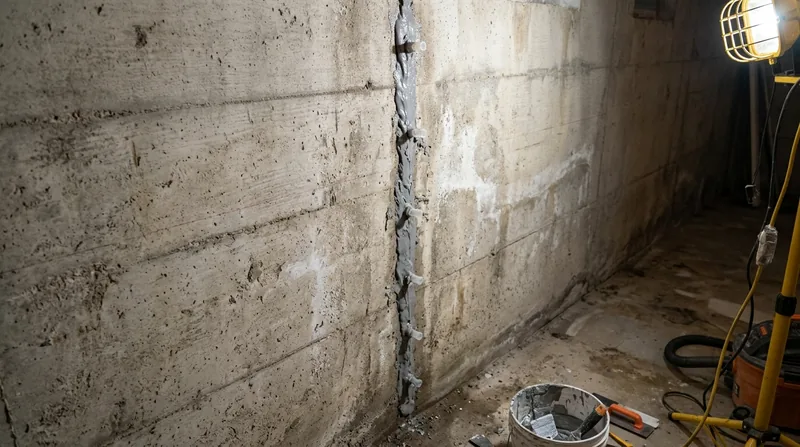




Foundation Crack Repair in Germantown: Stop Water Before It Finds the Floor
Germantown sits on clay-loam and silty soil over Piedmont schist and gneiss, and that ground holds water longer than most homeowners expect. The 1980s through 2000s subdivisions in Kingsview, Neelsville, and the town core were built with poured full basements, and the same clay that made grading easy back then now pushes hydrostatic pressure against those walls every spring. When a hairline crack opens at the floor joint or along a form tie, water follows it in.
Foundation Crack Repair in Germantown starts with reading the crack, not sealing it blind. We inspect the width, direction, and moisture pattern, then match epoxy injection, polyurethane injection, or a structural repair to what the wall is actually doing. If the crack is a symptom of pressure, we say so and point you to the right fix instead of selling a patch that fails by August. For the broader picture, see our basement waterproofing service.
Why Cracks Open in Germantown's Clay and What They Tell You
Upcounty Montgomery County gets a real freeze-thaw cycle, and the clay soil here swells when wet and shrinks when dry. That movement works on poured walls in the newer subdivisions and on the block walls of 1960s and 1970s split-levels in Montgomery Village. Summer storms run off the ridges toward the Seneca Creek branches, the water table rises in spring, and the wall takes the load. A crack that shows white efflorescence is a crack that has been weeping for a while.
- Vertical cracks near the middle of a wall usually come from shrinkage and are good candidates for injection.
- Stair-step cracks in block walls point to settlement or movement and need a structural look before sealing.
- Cracks at the floor joint often mean hydrostatic pressure, where an interior drain tile system does more than injection alone.
- Horizontal cracks or a wall that is visibly bowing call for carbon fiber straps or wall anchors, not a surface patch.
We tell Germantown homeowners plainly which of these they have, because the wrong repair wastes money and the water comes back.
Key info: A homeowner in the Kingsview area had a vertical crack weeping after every heavy storm. The crack was 1/16 inch wide and dry between rains, so epoxy injection closed it in one visit. A neighbor two streets over had the same looking crack at the floor joint, but the moisture pattern showed pressure from outside. That one needed interior drainage, not injection.
Permits for structural foundation repair are handled through the local building department, and rules vary by jurisdiction, so verify before work begins. You can check Montgomery County's permit guidance at Montgomery County Department of Permitting Services.
How We Diagnose and Repair a Foundation Crack in Germantown
We do not start with a caulk gun. The first step is finding out whether the crack is structural, a shrinkage crack, or a pressure leak, because each one gets a different method. On poured walls we map the crack and check for movement. On older stone and early block foundations in Damascus and Poolesville, we look at mortar joints and parging before deciding what will hold.
- We inspect the crack inside and out, checking width, direction, efflorescence, and moisture at the floor joint.
- We test for active seepage and note whether water appears only after rain or stays present, which separates a leak from pressure.
- We set injection ports along the crack and inject epoxy for structural cracks or polyurethane for active leaks that need to flex.
- We seal the surface, verify the fill, and check grading and downspout extension so the same water does not reload the wall.
- If the crack is structural or the wall is moving, we recommend carbon fiber straps or wall anchors and explain why injection alone will not hold.
Every repair ends with a clear explanation of what was fixed and what to watch for in the next wet season.
Key info: In a 1970s colonial in Montgomery Village, a stair-step crack in the block wall had been patched twice with hydraulic cement. The patch kept popping because the wall was still moving. We stabilized it with carbon fiber straps and then sealed the joints, which is the order that actually holds. For that scope, see bowing wall repair.
Repair Methods We Use and When Each One Fits
The method follows the crack, not the other way around. Here is how we match them on Germantown walls.
| Approach | Description | Best for |
|---|---|---|
| Epoxy injection | Ports are set along the crack and structural epoxy is injected to bond the two sides back together. | Non-structural vertical shrinkage cracks in poured walls that are dry between rains. |
| Polyurethane injection | A flexible resin expands on contact with water and fills the full depth of an active leak. | Cracks that weep during storms or stay damp, especially at the floor joint. |
| Carbon fiber straps | Straps are anchored to the wall and footing to resist inward movement on a bowing wall. | Horizontal cracks and walls that are visibly moving inward. |
| Wall anchors | Anchors driven into stable soil outside pull the wall back toward plumb over time. | More serious bowing where the wall needs to be pulled, not just held. |
| Interior drain tile | A perimeter drain at the floor joint collects water and routes it to a sump basin. | Cracks fed by hydrostatic pressure where sealing alone keeps failing. |
Foundation Crack Repair Cost in Germantown: What to Expect
Most single-crack injections in Germantown start around $450, and that figure covers a standard vertical crack in a poured wall with ports, resin, and surface sealing. The price moves up with crack length, access behind finished walls, whether the leak is active, and whether the wall needs structural work. A stair-step crack in a block wall or a bowing wall is a different job with a different number.
We give a range after the inspection, not before, because quoting a crack we have not seen is guesswork. Getting two or three estimates is smart, and ask each contractor what method they plan to use and why. If one bid is injection and another is excavation for the same crack, one of them has not looked closely enough. Our full pricing overview lays out the ranges we work from.
Foundation Crack Repair Near Me: How to Vet a Contractor Near Germantown
Ask for the license and insurance certificate before anyone walks the basement, and confirm the coverage is current. Get more than one estimate and compare the method, not just the total. Ask for references from jobs in Germantown or Montgomery Village with the same wall type and crack pattern you have.
If the repair is structural, ask who pulls the permit and confirm the local building department's requirements. If you are in an HOA community, check whether exterior work or discharge line routing needs approval. A contractor who answers these questions clearly is the one to hire. Reach us through our contact page to schedule a look.
Foundation Crack Repair in Germantown: Pricing Guide
| Service | Price | Details |
|---|---|---|
| Single vertical crack, epoxy injection | Starting at $450 | Includes port setup, structural epoxy, and surface sealing for one standard poured-wall crack. |
| Active leak, polyurethane injection | Starting at $550 | Includes flexible resin that expands against water, priced higher when the crack is long or damp. |
| Block wall or stair-step crack | Starting at $750 | Includes joint preparation and sealing, with cost rising if movement requires stabilization first. |
| Structural repair (carbon fiber or anchors) | On estimate | Bowing walls and horizontal cracks need an on-site look before any number is given. |
| Travel | Included | In Germantown and surrounding areas, with no separate call-out or mileage fee. |
| Estimate | Free | Response within 24h at (240) 261-0659, with no obligation to book. |
Indicative pricing, the exact cost depends on square footage, finish, and site access. Free personalized estimate within 24h at (240) 261-0659.


