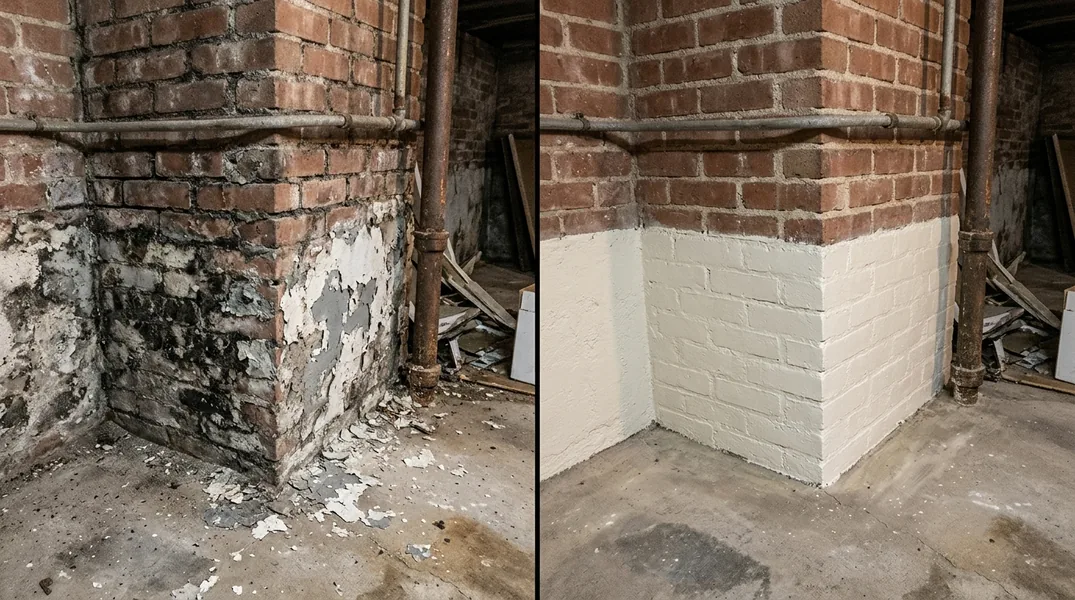
Why Germantown Homes Face Unique Waterproofing Challenges
If you live in Germantown, you already know that the local soil is not like the sandy loam you might find closer to the Chesapeake Bay. Much of Montgomery County sits on what geologists call the Piedmont formation, which is rich in clay. This Piedmont clay is dense, heavy, and notoriously slow to drain. When it rains, the water does not sink quickly into the ground. Instead, it sits against your foundation walls, creating hydrostatic pressure that pushes inward. Over time, that pressure finds every tiny crack and seam in your concrete or block walls.
This is why so many homeowners in Montgomery Village and Clarksburg start to notice dampness, white powdery efflorescence, or a musty smell in their basements. The question is not whether you need protection, but which type of protection makes sense for your home. When you are comparing interior vs exterior waterproofing, the answer depends on your foundation type, your budget, and how the water is entering. At Germantown Waterproofing, we help homeowners sort through these options every day, and we want you to understand the trade-offs before you spend a dime.
How Interior Drain Tile Systems Work
An Interior Drain Tile System is installed along the inside perimeter of your basement, usually at the base of the foundation wall where it meets the floor. The crew breaks up a narrow strip of concrete, digs a trench, and lays perforated pipe in a bed of gravel. That pipe channels water to a sump pit, where a pump lifts it out and away from the house. The system is then covered with new concrete, and often a vapor barrier is added along the walls to manage humidity.
The biggest advantage of interior drain tile is that it works regardless of the weather outside. You do not have to excavate your yard, which means your landscaping, driveway, and deck stay intact. It is also generally more affordable than digging up the exterior, and it can be installed year-round. For homeowners dealing with hydrostatic pressure and water seeping through the cove joint (where the wall meets the floor), interior drain tile is often the most practical and reliable fix. It captures the water after it enters but before it can damage your finished space.
What Exterior Basement Waterproofing Involves
Exterior Basement Waterproofing takes the opposite approach. It stops water before it ever reaches the foundation wall. This process involves excavating the soil around the perimeter of the house down to the footing. Once the wall is exposed, the crew repairs any cracks, applies a waterproof membrane or coating, and installs a drainage board or gravel layer. A new footing drain is often added at the base, and the soil is backfilled with proper grading to slope water away from the home.
Exterior waterproofing is the gold standard for keeping water out, and it also addresses the root cause of the pressure. However, it is more invasive and typically more expensive because of the excavation. If you have a finished basement, mature landscaping, or a concrete patio flush against the house, exterior work can be disruptive. That said, for homes with block foundations that are structurally compromised or for new construction, exterior protection is often the best long-term investment. Many homeowners in Gaithersburg choose exterior membrane systems when they are already planning major yard work or when the foundation is exposed for other reasons.
Drain Tile vs Exterior Membrane: A Practical Comparison
When people ask us about drain tile vs exterior membrane, we explain that they solve different problems. Interior drain tile manages water that has already entered the basement. It is a collection and removal system. An exterior membrane is a barrier that prevents water from entering in the first place. In a perfect world, every home would have both. In the real world, most homeowners need to choose based on their specific situation and budget.
If your basement is unfinished and you mainly see water along the floor edges after heavy rain, interior drain tile is usually the most cost-effective solution. If you have bowing walls, horizontal cracks, or water coming through the middle of the walls, exterior work may be necessary to relieve the pressure. Many of our clients in Germantown start with an interior system because it is less disruptive, and then add exterior grading improvements later. The key is to have a professional evaluate the source of the water rather than guessing. A proper Foundation Waterproofing assessment will tell you whether the issue is hydrostatic pressure, poor grading, gutter problems, or a combination of factors.
Basement Waterproofing Cost in Germantown: What to Budget
Homeowners often ask us for a ballpark figure before we even visit the property. While every basement is different, we can share some general ranges to help you plan. Interior drain tile systems typically cost less than exterior excavation because they require less labor and no heavy equipment. Exterior membrane systems cost more due to the digging, soil removal, and restoration of landscaping. The size of your basement, the length of the perimeter, and whether you need a new sump pump all affect the final number.
We encourage you to ask for a written pricing breakdown that separates labor, materials, and any optional add-ons like a battery backup sump pump or a dehumidifier. Be wary of any contractor who gives you a firm quote over the phone without seeing the space. At Germantown Waterproofing, we provide detailed, no-pressure estimates so you can compare options fairly. You can also call us at (240) 261-0659 to talk through your situation and get a sense of what to expect before you schedule a visit.
Basement Waterproofing Near Me: When to Call a Pro
If you are searching for basement waterproofing near me in the Germantown area, you are probably already seeing signs that concern you. Maybe there is a musty odor that never goes away, or you noticed dark staining at the base of your walls. Perhaps your sump pump runs constantly after a storm, or you have seen water pooling near the foundation outside. These are all signals that the Piedmont clay is doing what it does best: holding water against your home. Ignoring these signs usually leads to bigger problems, including mold growth, damaged drywall, and even structural movement.
The good news is that you do not have to figure this out alone. A professional inspection can tell you whether you need an interior system, exterior work, or a simpler fix like improved grading and downspout extensions. We have helped hundreds of homeowners in Germantown and the surrounding communities protect their basements and their peace of mind. If you would like a straightforward, no-obligation free estimate, reach out to us today. We will walk you through the options and help you choose the solution that fits your home and your budget.
Looking for a professional basement waterproofing contractor in Germantown? Germantown Waterproofing responds fast for all your basement waterproofing needs.
Get a Free QuoteOur services: Basement Waterproofing · Interior Drain Tile System · Exterior Basement Waterproofing